 +48 535 000 250
  office@cork-shop.co.uk


Waterproof cork flooring for the bathroom
Waterproof cork flooring for the bathroom. If you're looking for flooring that's resistant to spills and moisture, such as in bathrooms or laundry rooms, this is an excellent choice.
Not only is it waterproof, but it's also incredibly easy to install. Cork is also quiet, flexible (another advantage when walking), and a completely natural material. The dream bathroom should be beautiful, practical, and warm.
Cork interior elements are a highly original solution that successfully fulfills these key requirements of ideal design.
Hydro Cork
Waterproof cork flooring for the bathroom. Hydro Cork consists of cork tiles covered with a delicate vinyl film. Manufactured in Class T (extremely high abrasion resistance), they retain their properties even under the influence of furniture casters and are completely waterproof. Cork has a wonderful property that makes it the perfect flooring for the bathroom, where you often walk barefoot: it reflects heat.
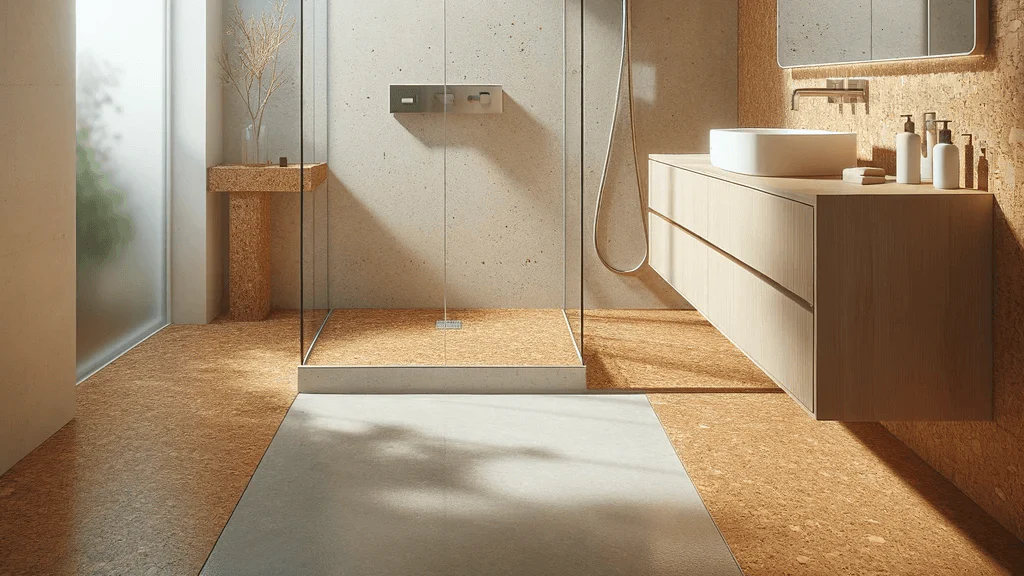
It provides a feeling of warmth underfoot and is an alternative to underfloor heating. Of course, a cork floor doesn't heat up, but the comfort of such a heat-reflecting solution is incomparably higher compared to bathroom tiles, which are always cold. Advantages of Cork Floors
Advantages of Cork Floors
The main advantage of cork over commonly used ceramic tiles lies in thermal comfort and convenience. Thanks to its cellular structure, cork is a material with excellent thermal insulation and soundproofing properties. Walking barefoot on a cork floor doesn't create the penetrating cold sensation often associated with ceramic floors. The soft surface also absorbs pressure very well, providing relief for muscles and joints. When properly installed, cork flooring can easily withstand indoor humidity and cold, adding a touch of elegance.
The most important thing to remember is that when choosing a cork floor for your bathroom, you should select the appropriate adhesive for the tiles. This ensures the surface is filled with water, preventing them from becoming waterlogged. Painting the entire finished floor, in turn, protects against moisture getting into the gaps between the tiles.