 +48 535 000 250
  office@cork-shop.co.uk


How cork fabric is manufactured
How Cork Fabric is Made. Cork material is made from the bark of the cork oak tree, which grows mainly in Spain, Portugal, and France. When the cork oak is 20 years old, a skilled worker removes the bark from the tree using a machete.
The tree is then numbered so that its bark cannot be removed for the next 10 years. Unlike other trees, the cork oak is the only tree in the world that can be stripped of its bark and does not die afterward. This makes cork harvesting 100% sustainable and ecological. In fact, the same tree can be a source of raw material every 10 years for over 200 years!
Turning Cork into Fabric
How Cork Fabric is Made. When the cork arrives at the factory, it is boiled in water to expand the cork cells and make the material easier to work with. Harsh chemicals like formaldehyde are not used in this process.
The cork is then cut into very thin sheets—the same thickness as tissue paper. To make them durable, the cork sheets are then glued onto a backing made of cotton/polyester or polyurethane.
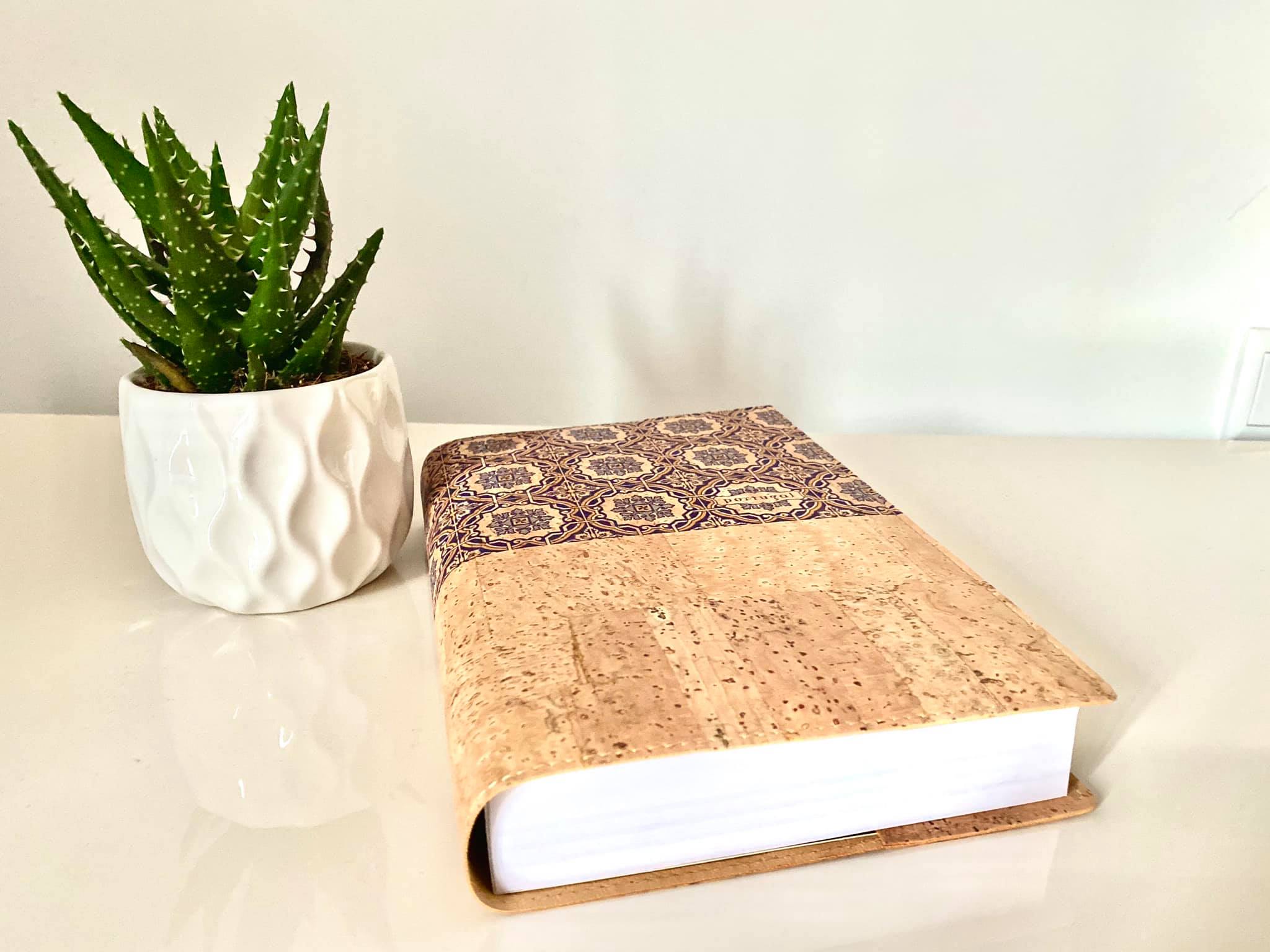
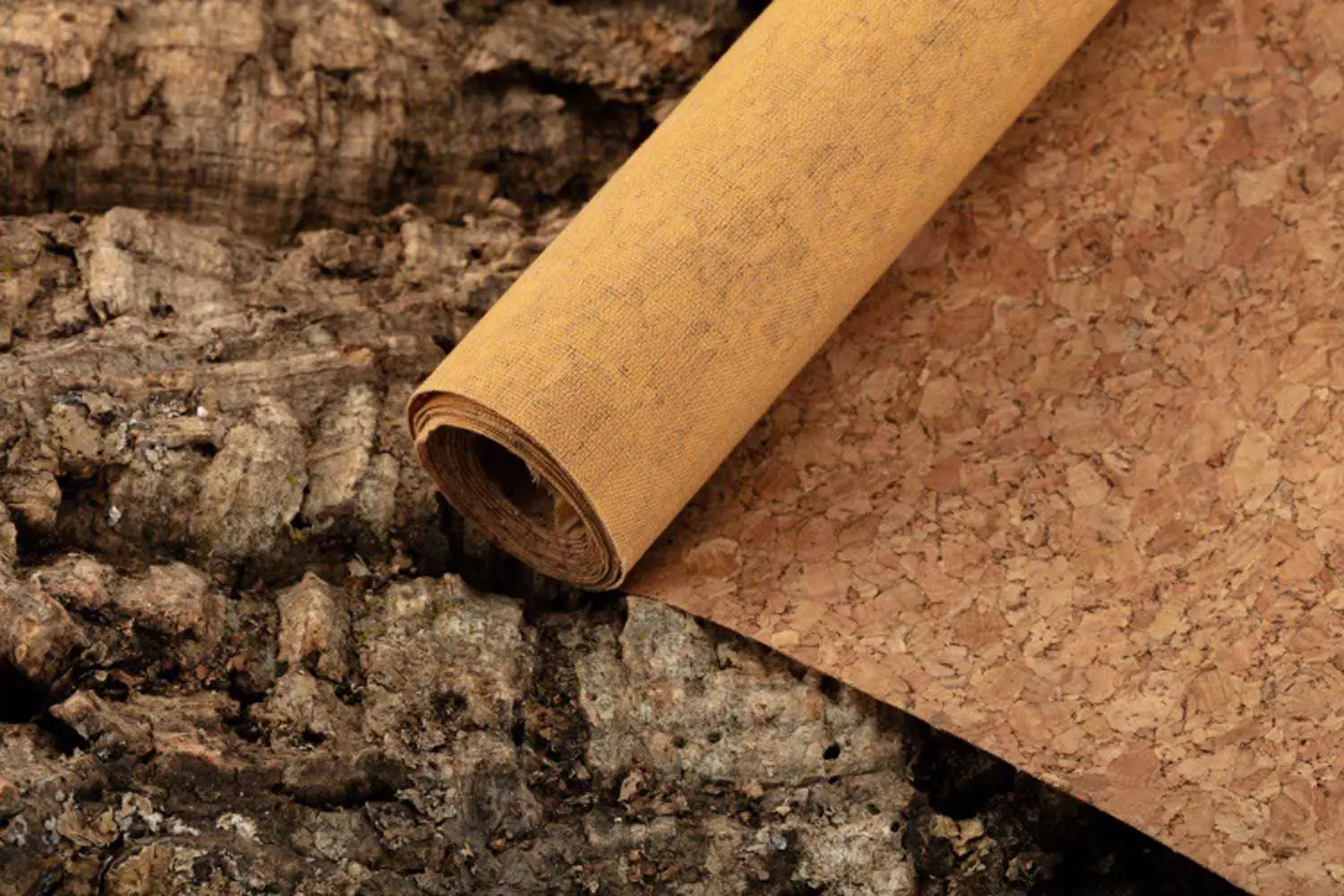
The cork pieces are sometimes glued onto the substrate in a patchwork fashion, similar to the corkboard sometimes used in work, and sometimes as thin lines – it all depends on the design. On the right in the photo – Cork Sofa by Trevor O’Neil. https://www.trevoroneil.com/
Examples of cork fabric applications:
While cork is naturally water- and dust-resistant, in the final stage of production, it is coated with a sealant (non-toxic, environmentally friendly) to protect it from dirt.
Cork folders
Cork upholstery instead of leather in the interior of a Mercedes-Benz
Once the process is complete, the cork material is stain-resistant, waterproof, scratch-resistant, and extremely soft. It can be used in the same products as leather and upholstery fabrics.